


Most construction sectors negotiate with time. If an office fit-out slips by six weeks, the tenant moves in six weeks later and everybody is mildly annoyed.
Higher education does not work like that. A teaching building handed over in late October does not open six weeks late. It sits empty until the following September, because you cannot move a cohort of students into a building halfway through their modules. The cost of a small delay is not a small delay, it is a year of lost use on an asset the institution has already paid for.
That single fact should shape every capital programme in the sector. In my experience, it often does not, and the reason is uncomfortable: the honest programme is rarely the one people want to hear at the start.

The tender where we told the client they would miss their date
A few years ago, before Apila, I was part of a team bidding for the project management role on a historic building refurbishment for a university. We had made the final three.
The client's question in the interview was direct. The building needed to be open for the start of the academic year, roughly eighteen months away. How would we deliver it?
We told them they would not.
Not as a challenge, and not as an opening negotiating position. We took them through the survey work a building of that age would demand, the likely extent of the unknowns behind the fabric, the statutory consents, the lead-in on specialist materials and trades, and what each of those did to the critical path. Then we said the programme they had in mind would not hold, that pushing for it would cost them money in acceleration and rework, and that the realistic target was the following September.
We won the job.
Afterwards, the client told us the other two consultancies had both said they could hit the original date. Neither had explained how. It was, to put it politely, an answer designed to win an interview rather than deliver a building.
The lesson I took from that, and have carried since, is that truth to power goes a long way. A client appointing a project manager is not buying agreement. They are buying judgement, and judgement is worthless if it only ever confirms what the room already hopes is true.
Why the optimistic date costs more than the honest one
Agreeing to a deadline that cannot be met does not save the programme. It moves the cost somewhere less visible.
Acceleration. Once a project is visibly behind, the response is overtime, additional shifts and out-of-sequence working. All of it is paid for at a premium, and productivity per pound falls exactly when the budget is tightest.
Compressed design. Optimistic programmes squeeze the design stages first, because they are the ones furthest from the deadline. Decisions get made with incomplete information, and the cost of correcting them lands during construction, where changes are most expensive.
Phased handover. When a September date starts slipping, the usual salvage plan is partial occupation. That means temporary compliance measures, fire strategy complications, separated site access, and a building in use while it is still a construction site. It is achievable, and it is never cheap.
Decant and contingency. If the new building is late, the accommodation being vacated has to be kept, extended or replaced at short notice. Very few institutions price this properly at the outset.
Credibility. The one that gets underestimated. A missed opening date is visible to students, academics, funders and the board, and it makes the next capital case harder to argue.
None of this is hypothetical, and the financial context makes it sharper. The Association of University Directors of Estates reported capital expenditure across the sector of over £2.5 billion in 2023/24, still significantly below pre-Covid levels, alongside a rise in poorly rated estate and a warning that projects were increasingly likely to be paused or cancelled. When capital is scarce, a project that consumes its contingency chasing a date it was never going to hit is not just a programme failure. It removes the money for the next project on the list.
Fixed date or wished-for date? Three questions
Not every date in a university programme carries equal weight, and the most useful early conversation a project team can have is separating the two. Ask three questions of any date in the brief.
- What actually happens on the day after? If the answer is “teaching starts in that space, timetabled, with students already enrolled”, it is fixed. If the answer is “the department would like to be in”, it is preferred, and it can be planned around.
- What is the cost of missing it by four weeks? For a genuinely fixed date, the honest answer is usually a full year. For a preferred date, it is inconvenience and some decant cost. Those are different orders of magnitude and should not be managed with the same contingency.
- Who owns the consequence? Fixed dates almost always belong to the academic side of the institution rather than the estates team. If the person who will be affected has not been in the conversation, the date is not yet real.
Run this over a typical brief and something useful happens. The single big “September” date usually turns out to be several dates with different owners and very different consequences. Commissioning, furniture, IT, staff familiarisation and student occupation rarely need to happen on the same day, and separating them is often where the programme finds the weeks it was missing.
The dates that are genuinely immovable
Any programme in this sector should be built around the parts of the academic calendar that do not negotiate.
| Constraint | Why it binds | Programme implication |
|---|---|---|
| Start of teaching | Timetabled space, enrolled students | The hardest fixed date on the calendar |
| Examination periods | Noise, access and vibration restrictions | Effectively a work stoppage on adjacent areas |
| Graduation and open days | Campus at full public visibility | Site presentation and access constraints, often underestimated |
| Clearing and enrolment | Peak load on estate and staff | Poor window for disruptive works or decant |
| The summer shutdown | The only true low-occupancy period | Heavily contested by every project on the estate |
That last row is the one that catches teams out. Summer is the obvious window, which means it is the window every project on the estate wants. An institution running several capital and maintenance schemes at once is scheduling them into the same twelve weeks, competing for the same access routes, the same craneage and often the same contractors. Planning your project's summer works without visibility of everyone else's is how a comfortable programme becomes an impossible one in April.
What good looks like
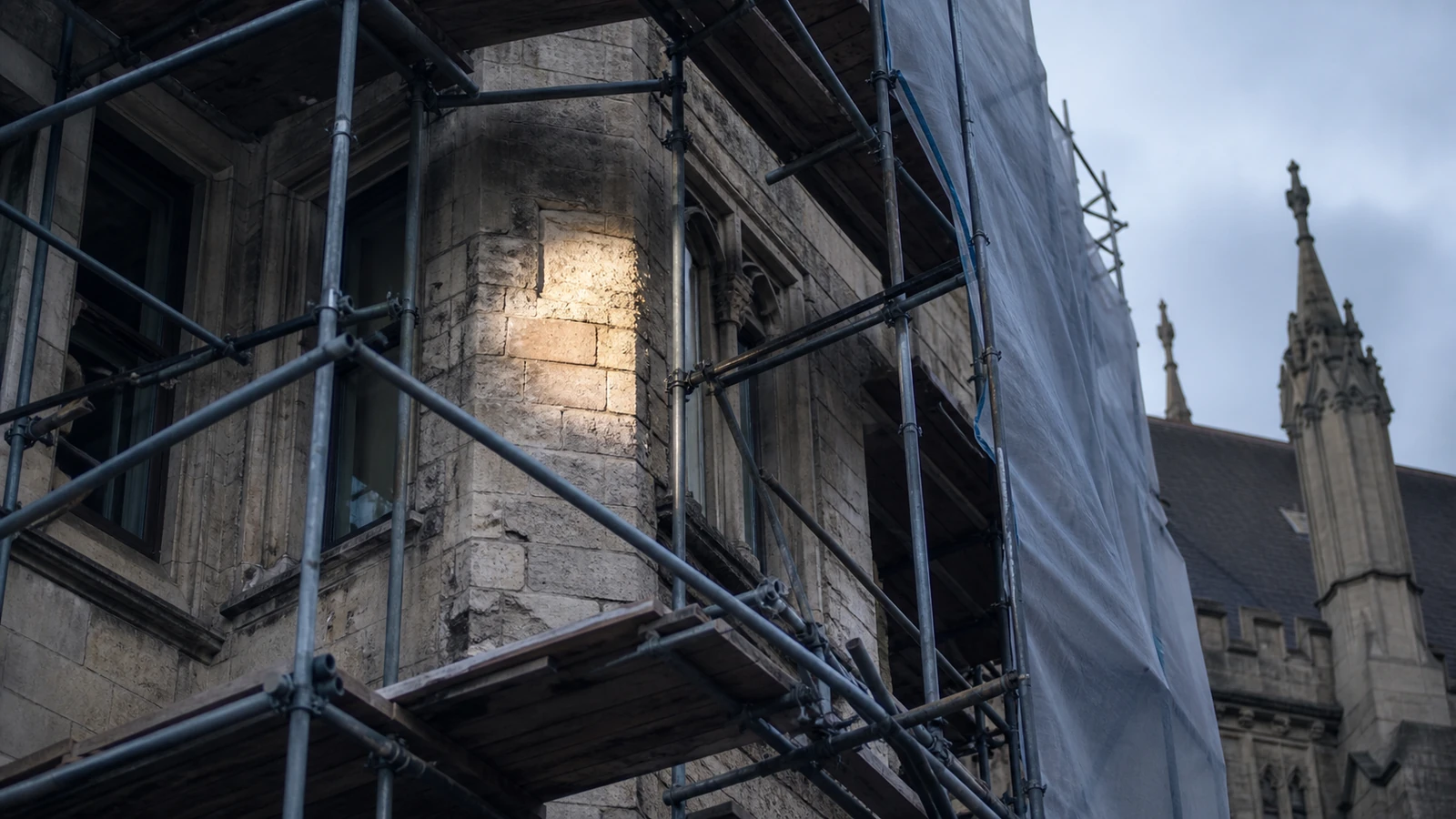
Working backwards from the academic calendar is the discipline. In practice that means locking the genuinely fixed dates first and building the programme to them, with contingency placed before the fixed date rather than notionally at the end where it cannot help. It means running the surveys on existing buildings early, particularly for historic estate, because unknowns discovered during construction are the single most common cause of academic-year slippage. It means getting the academic stakeholders who own the fixed dates into the governance structure from the start, not consulted once the programme is already in trouble. And it means saying so early when the date will not hold, at the point when options still exist, rather than reporting it as a fact three months out.
Universities are, in my experience, good clients for this way of working. Estates teams are used to being told the optimistic version and are generally relieved to hear the realistic one, particularly when it comes with the reasoning attached.