

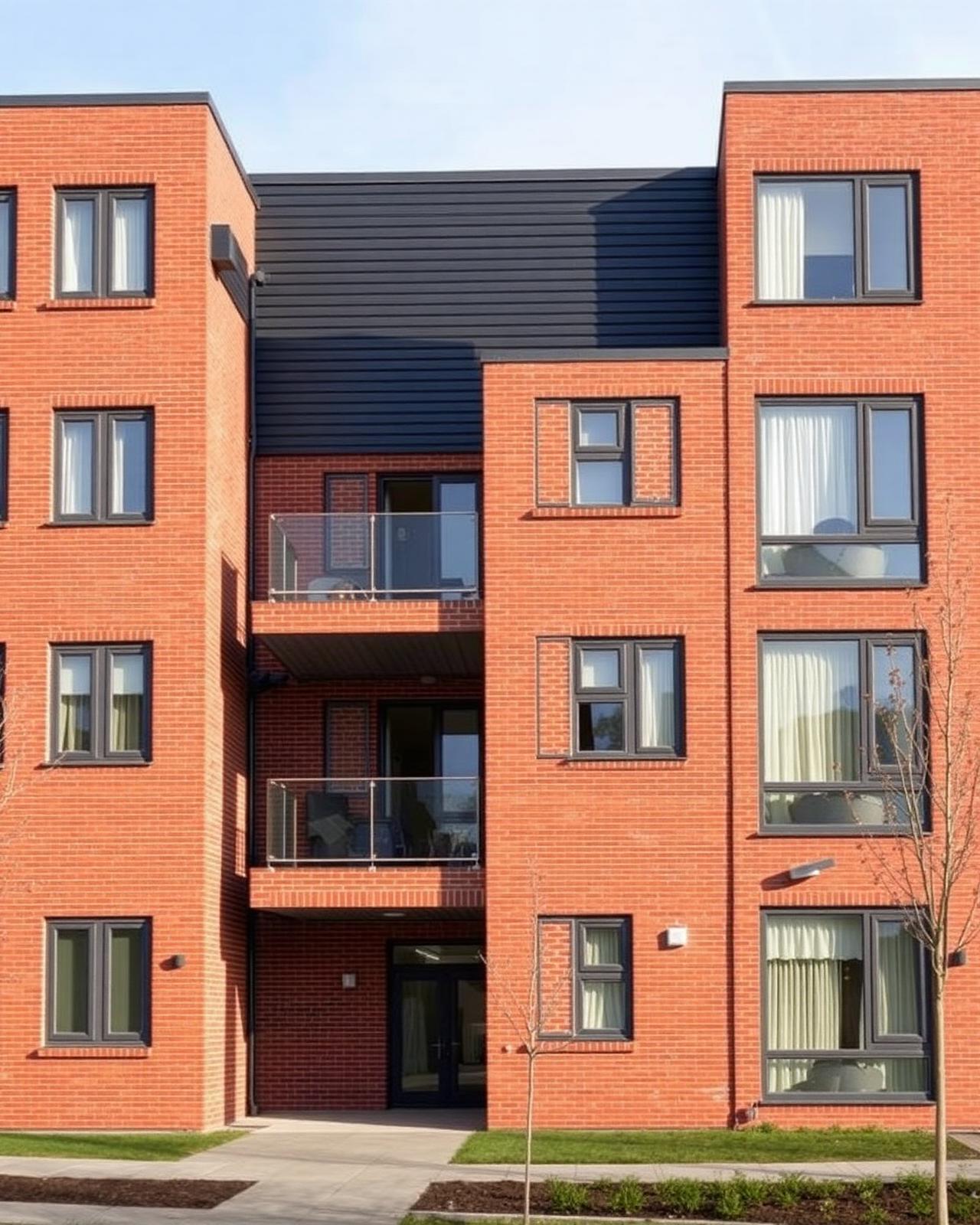



The question clients ask too late
"When should we appoint a project manager?" often arrives with a tender pack already in draft. The budget has been in a board paper for months. The procurement route was chosen when someone said "it will be design and build" and nobody disagreed. The design is at a stage where changing it costs money.
At that point a project manager can still add a great deal. But the job has changed. Instead of helping you take the decisions, they are managing the consequences of decisions taken without them.
This article sets out what is typically already fixed at each point a project manager might be appointed, so you can see the cost of waiting before you appoint them. It is written for developers at land or appraisal stage, and for institutions commissioning a building or building works. The principle is the same in every sector we work in: residential development, further and higher education, healthcare, and mixed-use and commercial.
What does a client-side project manager do once appointed?
A client-side project manager works for you, and only you, from the point of appointment through to handover. They run the programme, the consultant team, the risk register and the reporting, and they bring every decision that is yours to take with the options, the costs and a recommendation attached.
They do not take the decisions. You do. We put it this way: we manage it, you govern it. The project manager's job is to make sure you can govern it well, which means you get the right question, with the right information, at the right time. Our earlier article on what a client-side project manager does covers the role in full.
The point of this article is the phrase "from the point of appointment". Whatever was decided before their appointment, the project manager can advise on and, where there is still room, help you revisit. What they cannot do is unmake it.
Why does timing matter so much?
Because the ability to influence cost falls as a project moves forward, and the cost of making a change rises. Early on, a decision is a line in a spreadsheet. By construction it is a variation, priced by a contractor who already holds the contract.
Our analysis of residential schemes in Why Do Housing Developments Run Over Budget? found that six of the seven most common causes of overrun are decided before a contractor is on site: the budget, the surveys, the planning conditions, the completeness of the design at tender, the utilities strategy and the contingency policy. Every one of those is a decision taken early, often by people who do not yet have a project manager to advise them, and every one of them is cheaper to get right at feasibility than to correct on site.
There is a market reason too. BCIS put UK housebuilding cost inflation at 2.3% in the year to Q1 2026, yet forecast tender prices rising 15.5% over the five years to Q2 2031 (figures dated June 2026). A scheme bought now and built over the next three or four years is exposed to the forecast, not the current quarter. Whoever is advising you at appraisal needs to know that, and needs the standing to say it.
What is already fixed at each appointment point?
This is the timeline we use with clients. The stages follow the RIBA Plan of Work 2020, which most UK projects use as a common language, but the logic holds whatever framework your scheme runs on. Each row shows what is typically already decided by the time a project manager appointed at that point starts work.
| Appointment point | RIBA stage | What is usually already fixed | What a project manager can still shape |
|---|---|---|---|
| Strategic definition and brief | Stage 0 to 1 | Very little. The site and the ambition. | Everything: the brief, the budget method, the consultant team, the procurement options, the programme logic and the governance structure. |
| Feasibility and concept design | Stage 1 to 2 | The headline budget, often from a benchmark. The first programme. | The brief in detail, a proper re-baseline of the budget at the end of concept, the survey scope, the procurement route (your decision, with the options laid out), the risk and contingency policy. |
| Developed and technical design | Stage 3 to 4 | The budget, the design concept, the planning strategy and the planning consent. The procurement route is usually assumed. | The completeness of the design before tender, the employer's requirements, the tender strategy, how planning conditions are costed, the utilities programme. |
| Tender and contract award | Stage 4 to 5 | The budget, the route, the design, the consent, the tender list and most of the risk allocation. | The quality of the tender analysis, the contract particulars, the reporting structure, change control and how decisions reach you during construction. |
| Construction | Stage 5 | Almost everything, including the contractor and the price. | How well variations, claims, programme slippage and handover are managed. |
Read the table from the bottom up and the pattern is clear. The later the appointment, the shorter the right-hand column. The expensive decisions come first, and they come before most clients think they need help.
Appointment at brief and feasibility: the recommended point
This is where a project manager earns the fee many times over, for a simple reason: nothing has been fixed yet that cannot be changed cheaply.
At this stage the project manager helps you write a brief that can be costed, challenges a budget taken from a benchmark or the last scheme, commissions the surveys before the land price or the design assumes the best case, and lays out the procurement options with the consequences of each. The procurement route remains your decision; the project manager's job is to make sure you take it knowing what each route does to risk, programme and the role of the people advising you. Our comparison of the employer's agent and project manager roles explains why that matters on a design and build scheme in particular.
Senior people are always involved in this phase. Not always running the day to day, but always in the room when the brief, the budget and the route are being set, because those are the decisions that are hardest to reverse.

Appointment at design stage: possible, and often what happens
Plenty of clients appoint at Stage 2 or 3, usually because a design team is already in place and the scheme has started to feel like a project. It is a perfectly workable point to appoint, and we do it regularly.
What has changed is that the budget and the design concept exist, and both have started to acquire authority. The project manager's first task is to test them: is the budget a feasibility number that has quietly become a commitment, and does the design in front of you match it? If the answer is uncomfortable, this is still a cheap moment to hear it.
Appointment at tender: the common and costly point
Appointing at tender is the most frequent pattern we see, and it is the one we would most like to change. The client has a tender pack, a contract to administer and a list of things that need chasing. The appointment is made for capacity.
By now the budget, the procurement route, the design and usually the planning consent are fixed. If the employer's requirements are incomplete, every later clarification arrives as a change priced in a market of one. If the surveys were skipped, ground risk is about to be priced by a contractor who cannot see it. A good project manager will still improve the tender analysis, the contract terms and the way decisions reach you, but the big levers have gone.
Appointment after brief or feasibility is possible. It is not what we recommend, and when a client asks us to start at tender we say so, then start.
Appointment during construction: managing consequences
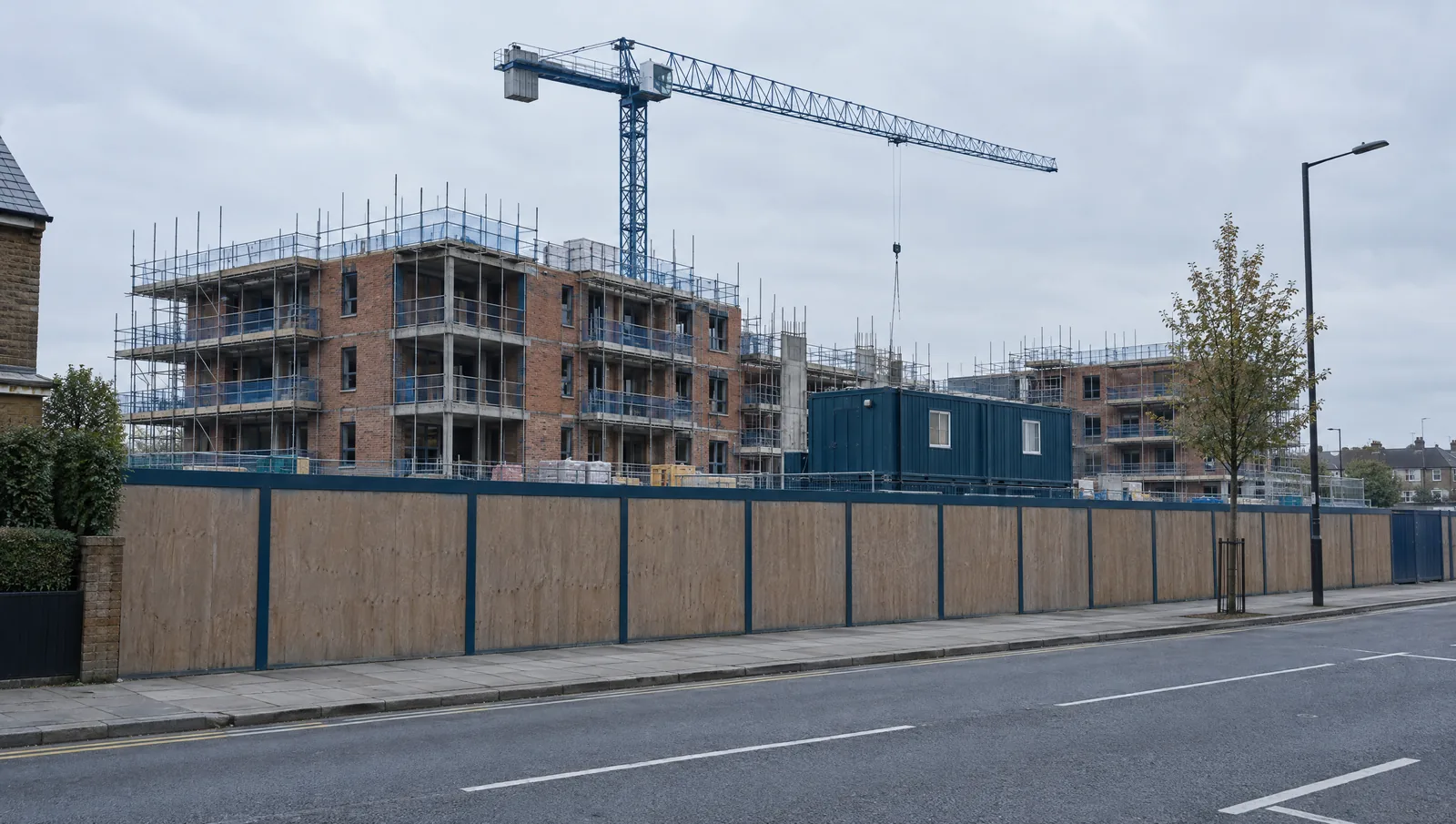
It happens, usually when something has gone wrong. The role here is recovery: establishing what was actually agreed, getting change control working, bringing the reporting back to something a board can act on, and protecting the client's position on claims and handover. Useful, and sometimes essential, but nobody should plan to appoint here.
How do you know which point you are at?
Ask four questions. If the answer to any of them is yes, the decision it refers to is already fixed, and the clock on the right-hand column above has started.
- Has a budget figure appeared in a board paper, funding application or land bid?
- Has anyone said the words "it will be design and build" (or any other route) without a paper comparing the options?
- Is there a design, at any stage, that someone has signed off?
- Is a tender pack being written?
Most clients find they are further along than they thought. That is not a criticism. Projects start informally, and the moment they become formal enough to need a project manager is usually a moment after several decisions have already been made. The lesson is simply to appoint at the first of those four moments, not the last.
What appointing early does not mean
It does not mean handing over control. A project manager appointed at brief does not decide your budget, choose your route or sign off your design. They give you the options and a recommendation, and they make sure the decision is recorded. The decisions stay yours.
It does not mean a large fee for a long time. Early-stage involvement is lighter than construction-stage administration. The work is advisory, the hours are fewer, and the value is highest because the decisions are largest.
It does not require a chartered project manager, and nothing in the regulations or the standard forms says it should. What matters is that the person advising you has delivered projects of your type, understands the decisions in front of you and will tell you when a date or a number will not hold. Johnny Clover, who leads Apila, is a chartered member of the RICS; that is his credential, not a condition we would place on anyone else.